
Sourcing pre rolled cones in 2026 is not the same process it was three years ago. Regulatory environments have tightened across key markets. Buyers have become more selective. Moreover, the demand for traceable, handcrafted production has shifted procurement conversations away from price-per-unit alone. As a result, finding the right manufacturing partner now requires a more structured approach, one grounded in trusted pre rolled cones manufacturer insights rather than catalog browsing.
Trusted Pre Rolled Cones Manufacturer Insights Shaping 2026 Procurement
The global market for pre rolled cones has matured considerably. Distributors and private label brands are no longer simply looking for the lowest MOQ. Instead, they are asking harder questions about consistency, compliance, and long-term supply reliability. These trusted pre rolled cones manufacturer insights reflect a buyer base that has learned — often the hard way — that cheap sourcing and reliable sourcing are rarely the same thing.
Several procurement priorities have emerged as consistent themes across the industry:
- Traceability of materials. Buyers in regulated markets increasingly require documentation of paper origin, pulp type, and processing methods. Manufacturers who cannot provide this are being removed from shortlists regardless of pricing.
- Batch-to-batch consistency. Distributors report that inconsistent fill weight and burn rate across shipments is one of the top reasons they switch suppliers. Consistency is a baseline expectation.
- Communication responsiveness. Procurement teams cite slow or unclear communication as a significant operational risk, particularly when managing international shipping timelines.
- Customization readiness. Private label brands need manufacturers who can accommodate logo, sizing, and packaging variations without extended lead times or inflated minimum orders.
Together, these priorities are reshaping how serious buyers approach the sourcing process in 2026.
Industry Trends Redefining Pre Rolled Cone Manufacturing Today
The pre rolled cone category is evolving at a pace that rewards buyers who stay informed. Several trends are directly influencing what manufacturers need to offer, and what buyers should be looking for when they evaluate new partners.
Key developments shaping the market right now include:
- Hemp cones have moved from niche to mainstream in the USA and across EU markets. Demand for natural, unbleached hemp paper continues to rise as end consumers prioritize cleaner materials.
- Private label volume has surged. Brands that previously bought generic products are now investing in custom SKUs with distinct sizing, branding, and packaging, making OEM flexibility a genuine competitive differentiator for manufacturers.
- Sustainability expectations have become purchase-stage requirements. Buyers in Germany, the UK, and Australia in particular are requesting environmental documentation before finalizing supplier agreements.
- Boutique, handcrafted manufacturing has undergone a significant premiumization. The story behind a product — where it is made, how it is made, by whom, now carries commercial weight in ways it did not five years ago.
Understanding these industry trends allows procurement teams to align supplier selection with where the market is moving, rather than where it has been.
How Global Demand Shifts Are Impacting Wholesale Cone Sourcing
Distributors and wholesalers across the USA, Canada, Germany, the UK, and Australia are responding to supply chain disruptions by diversifying their manufacturing base. Reliance on a single large-volume supplier has proven risky, and as a result, many buyers are actively adding boutique Southeast Asian manufacturers to their approved vendor lists. Indonesia, in particular, has attracted growing attention due to its combination of skilled handcraft production, export infrastructure, and competitive operational costs.
Furthermore, manufacturers based in Bali have benefited from a region associated with craft quality and attention to detail. A brand association that carries weight with premium retail buyers. For wholesalers managing quality control in cone production across multiple SKUs, working with a dedicated boutique manufacturer often delivers more reliable outcomes than splitting volume across several mass-market factories. The tradeoff in minimum order size is frequently offset by the reduction in quality-related returns and the strength of the supplier relationship over time.
Choosing the Right Manufacturer in a Saturated Global Market
For procurement officers comparing offshore manufacturers, the decision framework needs to go beyond price and lead time. Communication quality is the first filter, a manufacturer that responds promptly, provides clear documentation, and proactively updates buyers on production status is demonstrably lower risk than one that requires repeated follow-up.
- Request samples from multiple production runs, not just a curated showcase batch
- Confirm custom branding options come with documented timelines and costs, not verbal promises
- Ask for communication response benchmarks, how quickly does the team typically reply to order updates or production queries?
- Verify that regulatory documentation such as material certifications, export records, and compliance paperwork is already prepared and available on request
Finally, regulatory documentation readiness is increasingly non-negotiable, particularly for buyers in the EU and Australia. Manufacturers who already have export documentation, material certifications, and compliance records in order signal that they have worked with serious international buyers before, and are equipped to do so again. That readiness, more than any catalog or price sheet, is the most reliable indicator of a manufacturing partner worth committing to.
What Sets a Boutique Bali Manufacturer Apart From Mass-Market Suppliers
Mass-market cone factories optimize for volume. Boutique manufacturers optimize for consistency and client relationship depth. These are fundamentally different business models, and the difference shows up in ways that matter to B2B buyers.
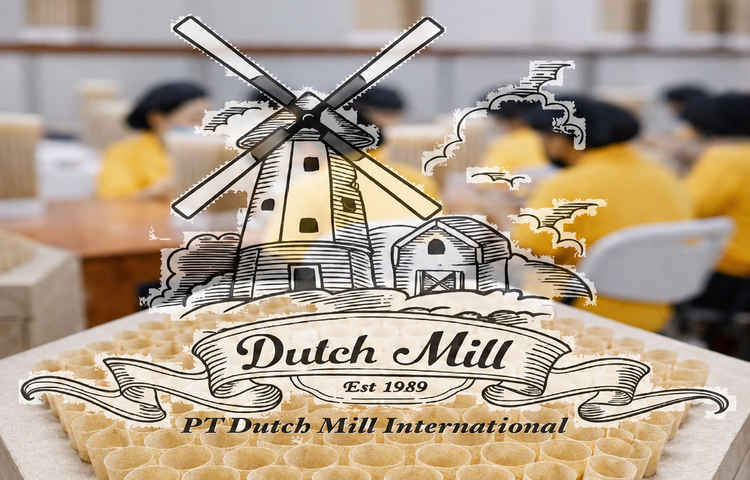
Dutch Mill International's handcrafted production model in Tabanan, Bali, reflects this distinction across several dimensions:
- Every production run is handled with the same attention to paper consistency and fill weight, regardless of order size — because quality control in cone production is embedded into the process, not bolted on at the end.
- OEM agility is genuinely available. Custom sizing, logo placement, and packaging design are standard offerings, not upsells reserved for large accounts.
- The B2B partnership approach means buyers work with a dedicated team who knows their product line and their market, rather than cycling through account managers in a large factory system.
- Made in Bali carries provenance value in premium retail markets, particularly in the USA and EU, where the story behind a product has become part of its appeal to end consumers.
Start Your Sourcing Journey With a Manufacturer That Delivers
Sourcing decisions made today will shape your product quality and brand reputation for the next several years. The manufacturers worth partnering with are the ones who treat every order, regardless of size, as the foundation of a long-term relationship.
Reach out to Dutch Mill International to discuss your volume needs, custom branding requirements, and receive a tailored quote for your next product line.